“Just a very unpleasant camping experience.”
Joseph Coakley, quoted in Woodstock: The Oral History by Joel Makower, Michael Lang
We arrived at White Lake farm in the late afternoon after a dusty hike along back lanes. There were no allotted pitches, nor was the campsite owner there to meet us. Sylvia went to check on the facilities while I hunted out a promising spot to pitch the tent. Summer showers had left the ground soft. The cow field curved down from a ridge into a deep bowl. Further rainfall would turn that lowland into a muddy bog, so I resolved to pitch high on the ridge on the edge of a wood. My first intimation that something was wrong came from Sylvia.
“The facilities are rudimentary,” her expression was grave with foreboding, “the site is filling up, but many of the campers seem ill-equipped.”
A muggy afternoon deepened into a sultry twilight. I gained the ridge, and gazed down. A great crowd was massing around a distant orange haze. I asked Sylvia if she knew what it was. She did not. The night grew cold. I set a campfire and lit it with a single match. All that existed in the world for me was illuminated by the flickering light of the campfire: Sylvia’s strong cheekbones, her chestnut hair tied back, her green singlet dusty from the trail.
“The ground cursed at me. There were lovers under my boots, lovers wrapped in plastic sheeting”
All night, I dreamt of a great exodus, of weary feet tramping. The Indian followed the herds of mastodon and giant buffalo across the ice of the Baring Straits to Newfoundland, and then down through the continent upon a ceaseless ancient quest, the Great Campers who walked the land before us and whose footsteps echoed under the soil.
I woke from this dream, and felt the need to use the facilities. It is a scientific fact that the body expends warmth heating up a full bowel and bladder. As I put on my boots, I was minded of the wisdom of Deutoronomy concerning camp latrines: “Thou shalt also have a place without the camp, whither thou shalt go abroad: And thou shalt have a paddle upon they weapon, and it shall be, when thou wilt ease thyself abroad, thou shalt dig therewith, and shalt turn back and cover that which cometh from thee.”
I took up my paddle and went out into the woods. The ground cursed at me. There were lovers under my boots, lovers wrapped in plastic sheeting. Under moonlight I saw bodies, bodies everywhere, in fitful, cold and painful sleep. My dream of exodus had come true. As I slept, a mass of people had arrived at the campsite. These child-like half-naked people had done nothing to ease their hardship, not even hollowed out a curve in the ground for their hip bone to rest in.
“What are you doing here?” I asked them.
“We have come for the music,” was their groggy reply.
“But there is no music,” I said.
A bearded naked man disagreed with me. He took me up onto the ridge and pointed to the distant orange glow. “That is where the music is,” he said. “Yesterday, some of my friends went to listen to it. I haven’t seen them since.”
I picked my way through the sleepers and into the woods. I dug a hollow and crouched over it. The tree tops thrashed overhead. Snagged in the branches, broken guy ropes and shreds of flysheet.
Dawn rose upon what I can only describe as the most disastrous camping trip in human experience. As I breakfasted, frying a little ham fat over the fire, our fellow campers hung around in muddy and sodden blankets, as mangy as jackals. Sylvia shared her bread and dripping with them, and they in turn offered her a reefer and a jug of wine. All good campers are abstinent; the discipline required at camp quickly falls apart with excessive libation. She cheerfully refused their offer, but found them friendly and implored me to help them.
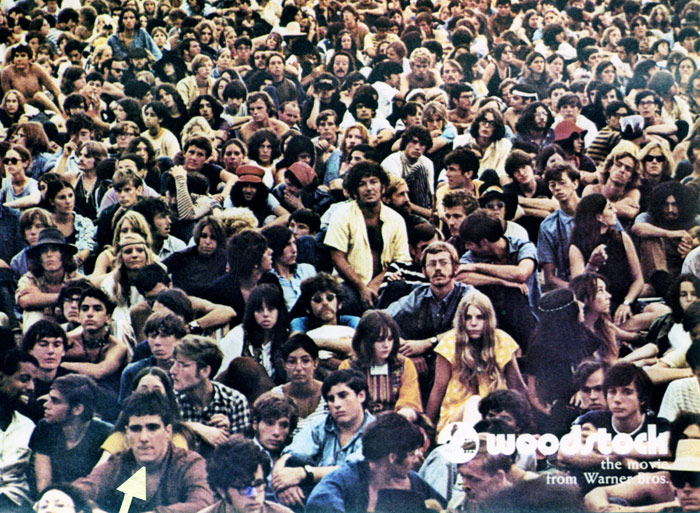
The clouds were low and swift. Spiders strengthened their webs. Portents of a storm. A camp needs a captain. The young men responded to my call to action. In no time, we strung up a tarpaulin between the trees. Again they offered us wine and smouldering reefers, as if that was their panacea to all ills. Their friends returned with stories of other goings-on across the campsite. The music, I ascertained, was far out. But the mood was labile, jackknifing from bliss to grinding fear. The barbed wire fences enclosing the campsite had been breached, spilling more ardent campers into our midst, and the mud in the hollow cow field had been churned into a quagmire.
“We must help the people down there too,” said Sylvia. I agreed. We packed a light rucksack with provisions for the day, and a change of dry clothes, and then we set off over the ridge and down toward the orange haze. The camp kitchens had been torched over night, in an act of self destructive delirium. Everywhere the spirit was poised between creation and destruction.
“It’s like a war zone,” gasped Sylvia.
Overhead, a helicopter kept a watchful distance, the violence of its rotor blades matched by flinching and twitching expressions upon the faces of stupefied campers. A trio of nuns passed ahead of us, they too had come to minister to this tragic assembly. I asked the nuns if any campers had died and one of them held up two fingers.
The crowd loitered bovine in the mud. It took hours of apologies to pick our way through them. At last, we reached the orange haze, a rig of lights and a stage, bookended by two towers, tall assemblies of scaffold with a tarpaulin stretched between them. Here, I reasoned, was the source of the music that everyone spoke of. Yet the stage was empty.
The long-brewing storm broke with terrifying vigour, the towers listed and shook, and the tarp – for want of a guy rope – twisted and billowed. The rain raked over the crowd. Sylvia and I, secure in our ponchos and boots, erected makeshift shelters out of the trash strewn upon the earth, plastic sheeting and splintered planks. No sooner had Sylvia and I heaved another improvised bivouac into position than it bulged with cold and weary youngsters. One man refused my offer of shelter. He lifted his dirty face to the downpour, and accepted it as his due.
A toothless clown clambered up on stage. He warned the crowd away from the towers. At last, I thought, someone to take charge of the rabble. I pleaded with my fellow campers to return to their tents and seek shelter. No, they would wait for the music.
“There is no music,” I shouted against the gale.
“You are wrong,” they muttered.
The clown took leave of his senses, and lead the mob into a chant to ward off the rain. Any good camper comes prepared for rain, and should have no need to resort to sympathetic magic. Under foot, the mud liquefied and turned to a foul slick. Camp hygiene was the first to suffer. The site was rank with body odour, and it was apparent, downwind of them, that the facilities had been overwhelmed.
I tried my best to enjoin the spirit of the thing. Against the silence flowing from the stage, spontaneous bands of music makers sprung up; a beautiful woman played the flute accompanied by a shirtless, long-haired gentleman on the bongos. A small crowd danced, the yearning for rapture teetered on the verge of desperation. From the stage, the toothless clown persisted with his announcements, even as the wind tried to blow him away. A messenger crouched beside the clown, and handed up a piece of paper containing further messages, and from the clown’s serious expression, I reasoned there was bad news to come. Behind the stage, at the centre of its own tempest, a helicopter reared over flattened grass, the side doors open, preparing to evacuate the first of the musicians.