Tag Archives: science fiction

“They only want you to do the wrong thing”

Jonathan Thornton visited me in Hackney for an interview he transcribed in its entirety for Fantasy Faction. I treated him to warm gozleme on Broadway Market and then coffee in the battered armchairs of Edgars. His transcription captures every molecule of caffeine in my brain. Our discussion ranged over my three SF novels and their connection to my book on camping. It can be read here.

Science fiction authors Jeff Noon and Matthew De Abaitua

Interview with Jeff Noon

I was invited by the BSFA to interview Jeff Noon to mark the publication of his new novel A Man of Shadows. I first read Jeff Noon’s Vurt in the 90s and my first published short story ‘Inbetween’ appeared in anthology of rave fiction called Disco Biscuits along with a story by Jeff.
Science fiction authors Jeff Noon and Matthew De Abaitua
Chad Dixon of the BSFA recorded the whole conversation. Here is the link. Hope it still works.

Godforsaken – a short story

I wrote a new science fiction short story for Christmas. It’s called Godforsaken and it’s available for free at Barnes & Noble. It takes place in the same world as my science fiction novels.

Godforsaken

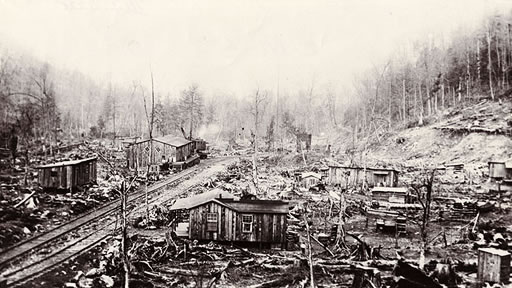
Of all the archive items the Institute has tagged for my inspection, the diaries and essays of Horace Emmons are the strongest candidate for entry into our shadow history of emergence. Particularly the entries covering the Christmas of 1921.

Emmons was – like myself – a librarian by trade. We share a certain loneliness too, as family men who have chosen to live apart from their families. My solitude, sequestered in the draughty rooms of the Institute, ought to be temporary. Emmons, after abandoning his wife and six children, was intent upon a permanent separation.

In the week before the Christmas of 1921, Emmons was struggling in the aftermath of an unspecified personal crisis. He had left the family home in October to undertake one of his habitual excursions into the Smoky Mountains then chosen not to return. In his diary, he avoids mention of his family. After spending Thanksgiving in the mountains, he notes only that the hunters arrived with leftover turkey in their sandwiches. Only in December does guilt encroach upon the margins of the diary. His day notes show resolve not to return to his family for Christmas Day. But the marginalia are shivering self-recriminations, scrawled and blotted under the dull glow of a campfire. I recognise the thought process, have felt it myself often enough.Nervous dyspepsia, as Emmons puts it. The towns and cities were dry with prohibition. Moonshine came from the stills hidden in the harsh country. The Mountain Dew. Emmons was a gentleman drunk and what he hymned as the call of the wild was, in my opinion, merely the holler of strong liquor.

To read on, click here.

Matthew De Abaitua reading IF THEN at Broadway Bookshop

IF THEN published in UK and US

My new novel IF THEN is out now, published by Angry Robot in the UK and US.

We launched the novel with signings at Forbidden Planet in London and Birmingham, and then a packed party in Broadway Books in Broadway Market, Hackney, just down the road from where I live.

Matthew De Abaitua, IF THEN, Phil Jourdan, Penny Reeve, Angry Robot

Me, editor Phil Jourdan and PR Penny Reeve from publisher Angry Robot

I’m keen to discover what readers make of IF THEN. To me, it represents a substantial advance in style, form and content over my debut novel The Red Men. There is a seven-year gap between the two novels. I’ve worked hard over the last four years in particular to improve my grasp of the various aspects of novel writing.

It may seem fussy to always set the title in upper case. But I prefer it that way as it reminds me of the software I used to write, from which the title is derived.

IF THEN has been listed by both I09 and Kirkus Reviews as being among the must-read science fiction and speculative fiction novels of autumn.

Early reviews have been positive.A round-up of them is below. I expect there will be more reviews to come.

“Matthew De Abaitua has written a novel about employment, about daily labour, about the dignity or otherwise of the working individual. IF THEN is a love story, the history of a marriage, a topical meditation on the end of capitalism; best of all, it is a bone-deep, blood-sweet British fantasy, naive and ingenious as William Morris and as warpedly nostalgic as Richard Jeffries’ After London. It is also the only intelligent book ever written about the technological singularity. As disturbingly hyperreal as any Pre-Raphaelite painting, IF THEN imagines what the end of history really will really look like, what’s really at stake, and maybe, just maybe, what we can do about it.” Simon Ings, author of Wolves.

‘Besides a surreal atmosphere, there is some perfectly executed and beautifully described weirdness in IF THEN. Every once in a while, just when things are starting to feel, if not normal, consistent, De Abaitua drops in reminders that the people of Lewes live in a manufactured reality, carefully controlled by something that can quantify, but not understand, humanity. I was drawn into James’ perceptions over and over just for us to be reminded that people and their actions were not genuine.’

I can’t recommend this book more highly. It’s slipstream fiction for polymaths. IF THEN flips off expectations of genre and leaves me feeling like I’m riding its shockwave into the future of literature.’

Karin Wellman, Boldly Read

‘IF THEN is personal and focused on small details, while at the same time addressing the big questions of life and what does it mean to be human. In a way it is an example of the personal made political, which is something that I really believe. Even if you think this isn’t a book for you, I’d urge you to take a chance on it, it really is a fascinating read.’ Susan Hated Literature

‘What follows is a meditation on violence and war. James finds himself working with Hector as a stretcher bearer in an artificial reconstruction of the Gallipoli campaign. Through James’s eyes we see the brutality and senselessness of war. We are forced to reflect on the way modern society normalises war and conflict for the many by concentrating the horror of it in a few. If Then asks us what value we place on people beyond their role as economic units, and whether we would rethink our actions if we were able to truly experience their consequences at first hand.’ Liwella, Astounding Yarns 

A copy of Living in the Future magazine

Living in the Future

I contributed a short essay to Frieze about Living in the Future magazine.

A copy of Living in the Future magazineLiving in the Future is a small magazine of essays, fiction, speculations and poetry, exploring science fiction ideas and the ‘science fiction-like phenomena’ emerging in the contemporary world. What are these emerging ‘science fiction-like’ phenomena? Not space exploration, aliens or time travel. Rather, Living in the Future examines the possibilities of artificial intelligence, the actualities of human interaction with computer algorithms, bio-technology and the cultural dominance of the network. It is, then, part of art’s evolving response to what we can call network culture.

Read on.

Lancashire Fusiliers on the boat to Gallipoli

Introducing IF THEN

Tor.com is running a brief interview I did with Niall Alexander on the back of the acquisition of my new novel IF THEN by Angry Robot. In it, I explain briefly why there is such a gap in time between first publication of The Red Men and the 2015 publication of IF THEN. I also discuss the image that inspired the novel, and why I wanted to imagine the First World War as science fiction:


Basically I wanted to re-experience the war as a science fiction event, as a monster of technology with an inhuman agency. And I wanted to write post-austerity SF about a disenfranchised and redundant middle class being maintained by an algorithm. Because that was my experience at the time. And wandering the South Downs I had a keen sense—almost a vision, among the sea fret—of a newly-dug trench appearing in the Downland. Science fiction combines the cognitive reasoning impulse with the irrational, dreaming, will-to-strangeness. So I went along with this vision of a long-lost war being recreated by a non-human agency. There comes a point where you just have to get on your hands and knees and crawl deeper into the rabbit hole.


how to write science fiction

How to Write Science Fiction

Not that I consider myself an expert. A neophyte, still. But I’ve gleaned some ideas from other more experienced writers and put together an article on writing science fiction for Publishing Talk, here.


Here is an extract about robots:

Robots replace workers, and they always have, ever since a sorcerer first summoned a golem to clean up his lair.

Think of all the people in the public service you encounter across the course of your life: midwife, nursery assistant, nanny, primary school teacher, youth worker, fireman, policeman, lawyer, parole officer, prison officer, doctor, surgeon, palliative care nurse, undertaker. Then replace them all with robots, many different mechanical bodies but all guided by one cloud-based intelligence.

In this world, the machine gaze that first greets you when you come into the world will be the same diffident, algorithmic mind which lowers you into the earth.

Angry Robot acquire novels

Giddy with excitement, I can announce that publisher Angry Robot have acquired my next two SF novels: IF THEN, for publication in the UK and US in September 2015, and The Destructives in 2016. The full announcement is on the Angry Robot site.

angry-robot angry robot logo

IF THEN is finished and I’m keen to discover what readers make of it.  For now, I’m just sharing the synopsis. As publication draws nearer, more cat will be allowed out of the bag.

IF THEN

James has a scar in the back of his head. It’s where he was wounded in the Battle of Suvla Bay in August 1915. Or is the scar the mark of his implant that allows the Process to fill his mind with its own reality?

In IF, the people of a small English town cling on after an economic collapse under the protection of the Process. But sometimes people must be evicted from the town. That’s the job of James, the bailiff. While on patrol, James discovers the replica of a soldier from the First World War wandering the South Downs. This strange meeting begins a new cycle of evictions in the town, while out on the rolling downland, the Process is methodically growing the soldiers and building the weapons required to relive a long lost battle.

In THEN, it is August 1915, at the Battle of Suvla Bay in the Dardanelles campaign. Compared to the thousands of allied soldiers landing on this foreign beach, the men of the 32nd Field Ambulance are misfits and cranks of every stripe: a Quaker pacifist, a freethinking padre, a meteorologist, and the private (once a bailiff) known simply as James. Exposed to constant shellfire and haunted by ghostly snipers, the stretcher-bearers work day and night on the long carry of wounded men. One night they stumble across an ancient necropolis, disturbed by an exploding shell. What they discover within this ancient site will make them question the reality of the war and shake their understanding of what it means to be human…


Arc 2.2 Chromewash

The Destructives in Arc 2.2

My short story The Destructives is published in Arc 2.2, available on tablet, mobile etc. It’s pleasing to be in such august company (M John Harrison, Ned Beauman, Joanna Kavenna, Jane Rogers, Michael Marshall, Simon Ings – and that’s only the authors I have on the SF bookshelf behind me).

Arc 2.2 Chromewash

As short stories go, The Destructives is pretty long – about six thousand words. I wrote it in the wake of finishing a novel, from an initial idea of ‘Mad Men in Space’. It’s set under the ice of Europa and so I was able to use the latest discoveries about that intriguing and promising moon.

Here is an extract:

The pod surfaces in a moon pool within the habitat. As the client promised, Alex is met by Petra Elisson, the middle generation of the would-be-dynasty of the Europan Elissons. Petra is in her late thirties, with good skin, her ethnicity somewhere between New York and Tokyo; she is let down by provincial tailoring and a haircut so unfortunate it merits a card of condolence.
Alex corrects the line of her trouser suit and the sweep of her jet-black fringe then steps out onto the landing stage. The air pressure is not quite right and neither is the gravity. Disembarking with dignity requires some concentration.
“Pleasant flight?” asks Petra Elisson.
“Always.”
“The rest of the team not coming?”
Alex points upward in the direction of outer space.
“The destructives remain on board The Significance for now.”
“Then they will miss out on all the fun.”
In response to Petra’s joke, Alex finds a suitable smile.
The walkway is a narrow girder surrounded by illuminated transparent tubing. Outside, a question mark of megafauna swirls through the dark water. Her eyes will have to adjust before she can appreciate the subtle differences of darkness.
“We’re all very excited about your presentation,” says Petra. “It’s an honour to have the creatives who reinvented the flutterby working on our account.”
She wants to correct her: not creatives, the destructives.
The flutterby had been developed as a flying protein snack for hard-partying twentysomethings in lowgrav environments but the novelty of a self-propelled salty treat could not offset cultural aversion to eating anything that resembled an insect. The product trials tanked. The destructives repositioned it as the snack for feliners who really like to play with their food.
The existence of hybrid species such as the feliners and caniners had threatened heresy against market fundamentalism. But the trajectories of the hybrids were plotted, and it was predicted that they would not become a threat to the culture. Indeed, hybrid species opened up new product categories in everything from snack foods to home furnishings, and as hybridisation was accompanied by a drop in intelligence, clients didn’t have to spend so much on media to convert them into customers. It was just a shame she found the hybrids so repulsive. But then, as Bougas said, when he came into her hotel room and opened his robe, revealing a satyr’s gut and an afterthought of genitalia: “Disgust, madam, is a cultural construct.”

The story is complete in itself but it is part of a much larger world, a much bigger story, spanning generations.

Arc is published by the New Scientist and is an inspiring, thought-provoking collection of future shock and other speculations.