Category Archives: Articles

A copy of Living in the Future magazine

Living in the Future

I contributed a short essay to Frieze about Living in the Future magazine.

A copy of Living in the Future magazineLiving in the Future is a small magazine of essays, fiction, speculations and poetry, exploring science fiction ideas and the ‘science fiction-like phenomena’ emerging in the contemporary world. What are these emerging ‘science fiction-like’ phenomena? Not space exploration, aliens or time travel. Rather, Living in the Future examines the possibilities of artificial intelligence, the actualities of human interaction with computer algorithms, bio-technology and the cultural dominance of the network. It is, then, part of art’s evolving response to what we can call network culture.

Read on.

how to write science fiction

How to Write Science Fiction

Not that I consider myself an expert. A neophyte, still. But I’ve gleaned some ideas from other more experienced writers and put together an article on writing science fiction for Publishing Talk, here.


Here is an extract about robots:

Robots replace workers, and they always have, ever since a sorcerer first summoned a golem to clean up his lair.

Think of all the people in the public service you encounter across the course of your life: midwife, nursery assistant, nanny, primary school teacher, youth worker, fireman, policeman, lawyer, parole officer, prison officer, doctor, surgeon, palliative care nurse, undertaker. Then replace them all with robots, many different mechanical bodies but all guided by one cloud-based intelligence.

In this world, the machine gaze that first greets you when you come into the world will be the same diffident, algorithmic mind which lowers you into the earth.

dinner party wars by matthew de abaitua

The Dinner Party Wars

My short story ‘The Dinner Party Wars’ can be read for free and in full at alternative literary site 3:AM. It’s about the highly formalised duelling that goes on between the dinner party set in London. Only vintage weapons are allowed.

I wrote ‘The Dinner Party Wars’ over ten years ago, and published it in The Idler. Fortunately 3:AM fiction editor Joanna Walsh aka @badaude remembered the story, and asked me if they could reprint it. I published a batch of short stories in The Idler in this ilk: comic, media-inspired, riffing pieces. Often I would finish writing on a Thursday then perform the story on a Friday night at the Idler parties in the TARDIS in Clerkenwell. So the voice is broad and comic. Most have dated but I remain fond of The Dinner Party Wars because it sprang fully formed from a dream, and retains a distinct but fitting strangeness.


Still from Ed Atkins' Ribbons

Head Space

In conversation with Ed Atkins for Frieze Magazine, September 2014

Still from Ed Atkins' Ribbons

I meet with Ed Atkins in a side room of Cabinet, a London gallery close to the cluster of tech start-ups around the Old Street roundabout. As a science fiction writer, I’m interested in how technology is changing us, and how art is tracking those changes. Atkins’s video work ‘Ribbons’ (2014) – which, on different screens, formed the heart of his recent untitled solo exhibition at the Serpentine Sackler Gallery in London – follows the self-debasement of a naked, tattooed, computer-generated avatar as it puts away the fags and booze with abandon. It speaks with Atkins’s voice.

The avatar can play the doppelgänger, unleashing the dark self. The troll. The hater. But ‘Ribbons’ also explores how we are in a feedback loop with technology. At the entrance to the Serpentine exhibition, a screen showed a computer-generated head bouncing endlessly down a flight of stairs; it created a grisly punctuation. The loop is a signature of our times, whether in musical beats or GIFS. The loop is repetition, over and over again in the now. It’s very important to be kept in the loop.

Read the conversation at Frieze

Arc 2.2 Chromewash

The Destructives in Arc 2.2

My short story The Destructives is published in Arc 2.2, available on tablet, mobile etc. It’s pleasing to be in such august company (M John Harrison, Ned Beauman, Joanna Kavenna, Jane Rogers, Michael Marshall, Simon Ings – and that’s only the authors I have on the SF bookshelf behind me).

Arc 2.2 Chromewash

As short stories go, The Destructives is pretty long – about six thousand words. I wrote it in the wake of finishing a novel, from an initial idea of ‘Mad Men in Space’. It’s set under the ice of Europa and so I was able to use the latest discoveries about that intriguing and promising moon.

Here is an extract:

The pod surfaces in a moon pool within the habitat. As the client promised, Alex is met by Petra Elisson, the middle generation of the would-be-dynasty of the Europan Elissons. Petra is in her late thirties, with good skin, her ethnicity somewhere between New York and Tokyo; she is let down by provincial tailoring and a haircut so unfortunate it merits a card of condolence.
Alex corrects the line of her trouser suit and the sweep of her jet-black fringe then steps out onto the landing stage. The air pressure is not quite right and neither is the gravity. Disembarking with dignity requires some concentration.
“Pleasant flight?” asks Petra Elisson.
“Always.”
“The rest of the team not coming?”
Alex points upward in the direction of outer space.
“The destructives remain on board The Significance for now.”
“Then they will miss out on all the fun.”
In response to Petra’s joke, Alex finds a suitable smile.
The walkway is a narrow girder surrounded by illuminated transparent tubing. Outside, a question mark of megafauna swirls through the dark water. Her eyes will have to adjust before she can appreciate the subtle differences of darkness.
“We’re all very excited about your presentation,” says Petra. “It’s an honour to have the creatives who reinvented the flutterby working on our account.”
She wants to correct her: not creatives, the destructives.
The flutterby had been developed as a flying protein snack for hard-partying twentysomethings in lowgrav environments but the novelty of a self-propelled salty treat could not offset cultural aversion to eating anything that resembled an insect. The product trials tanked. The destructives repositioned it as the snack for feliners who really like to play with their food.
The existence of hybrid species such as the feliners and caniners had threatened heresy against market fundamentalism. But the trajectories of the hybrids were plotted, and it was predicted that they would not become a threat to the culture. Indeed, hybrid species opened up new product categories in everything from snack foods to home furnishings, and as hybridisation was accompanied by a drop in intelligence, clients didn’t have to spend so much on media to convert them into customers. It was just a shame she found the hybrids so repulsive. But then, as Bougas said, when he came into her hotel room and opened his robe, revealing a satyr’s gut and an afterthought of genitalia: “Disgust, madam, is a cultural construct.”

The story is complete in itself but it is part of a much larger world, a much bigger story, spanning generations.

Arc is published by the New Scientist and is an inspiring, thought-provoking collection of future shock and other speculations.

Failed Job Interviews of a Novelist

In November 2013, I was invited by LDNIA to speak at their gathering held in the Albion agency in Shoreditch. LDNIA is a network of designers, information architects and writers. To open my talk, I performed an imaginary dialogue based on a couple of failed job interviews I had in the previous decade. Gollancz are running an edited version of that dialogue on their blog.

The geysers of Enceladus

Music To Write Science Fiction By

I’m writing a series of interconnected science fiction stories called ‘The Destructives’. The first will be published in March 2014 by Arc, the longform SF and futuristic tablet publication from the New Scientist. I write to music, using it as a way of cueing in the state of mind required for the story. I put this mixtape together for Australian magazine The Lifted Brow, culled from the three hour-or-so Destructives playlist.

Matthew De Abaitua – A Mix for the Lifted Brow by The Lifted Brow on Mixcloud

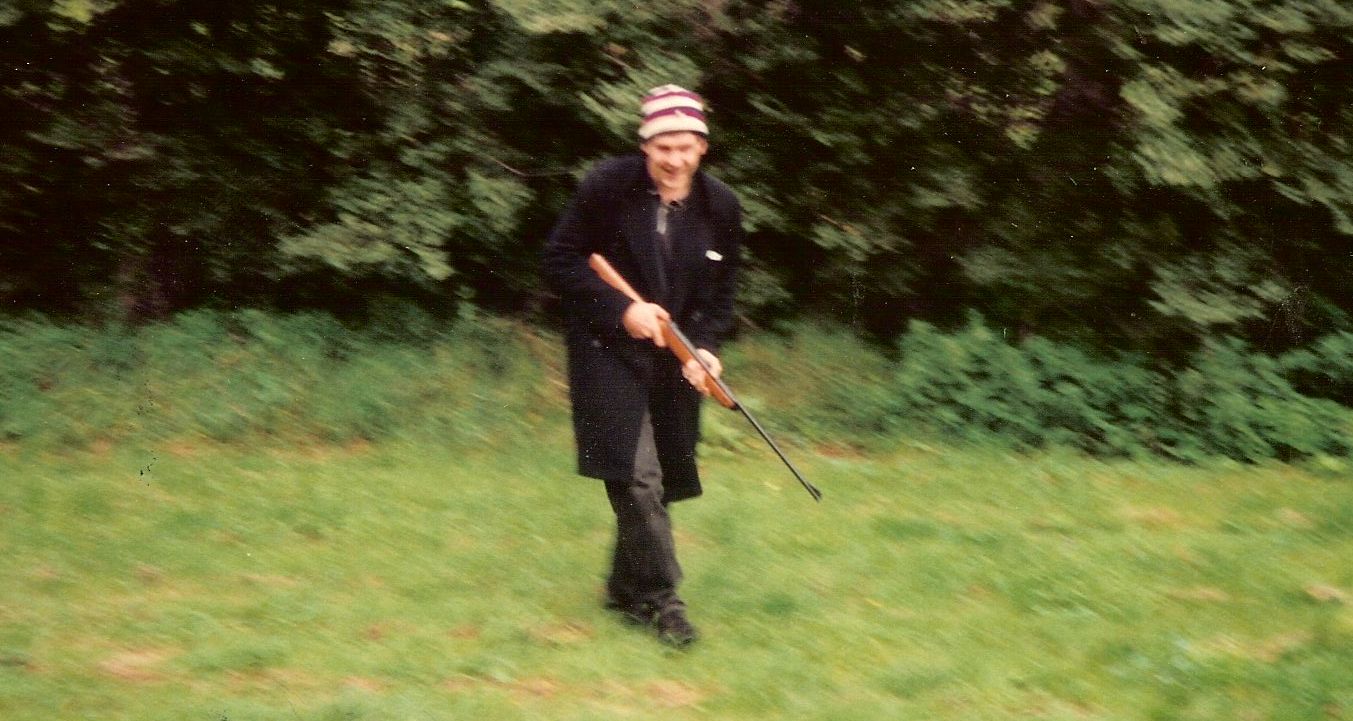
matthew de abaitua with air rifle in suffolk

Self & I

My essay Self & I is published in Five Dials, and can be read for free here. It’s a memoir covering some of my time as Will Self’s live-in amaneunsis in the 1990s. It was originally written to be read aloud at the Port Eliot festival and so it is a fleet and comic approach to the period, modelled on Withnail & I. Everything included in it is – to the best of my recollection – true. I’ve written a few more chapters and may revisit this time again for a slim volume.

matthew de abaitua with air rifle in suffolk

Matthew De Abaitua with Will Self’s gun in the garden of 1 Hall Cottages.

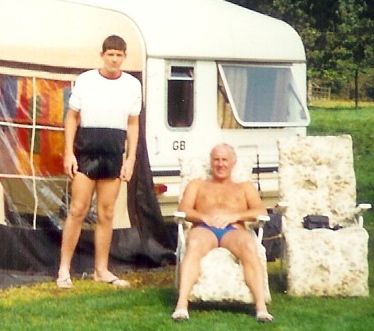
father and son wearing trunks

Trunks

father and son wearing trunks

I have finally learnt to swim properly. For months, I have been gamefully thrashing away with a breaststroke undeveloped since the mid-1980s, keeping my head above water at all times and exiting the pool with a distinct pain in the neck. This style of breaststroke, in which the swimmer attempts to preserve their hairdo at all cost, served me well on the three or four occasions, in the previous twenty years, that I exercised.

Now that I am forty, and attempting to outswim death, a more efficient stroke is required; after an evening with Google, some terrible advice from a content farm (“Inhale when your face is in the water, and exhale when it is out” – thanks eHow). and the purchase of some goggles, I did it; I stopped swimming like an old lady.
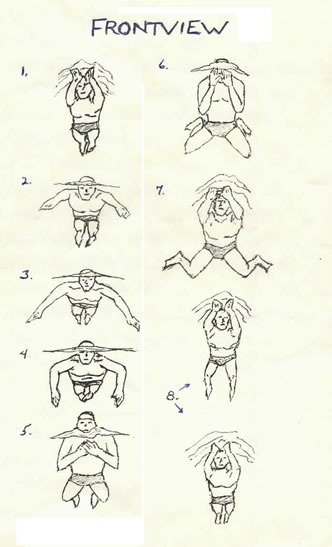
Directions on how to swim breaststroke

I glided alongside the proper swimmers in the grown-up lanes. Pausing for breath in the shallow end, I had a faint muscle memory. Something in my childhood to do with running with the big kids. No, not running. But something like running.

“The Frenchmen on the sun loungers were

hirsute and wore tiny speedos stuffed with

roadkill”

After changing, I sat in the leisure centre lounge sipping hot chocolate and the memory returned: boys cycling down Newlyn Avenue near to my family home, and me cycling to keep up with them. No, wait. Not cycling. I didn’t have a bike. Not then. I was five or six years old. The other boys were going so fast on their bikes and I was thrashing away trying to keep up, doing a kind of breaststroke. Surely not. How could they have been riding and I swimming?

To answer that question, we must inspect my trunks. I’ve been swimming four miles a week for five months and yet only last weekend did I buy a pair of goggles and – more crucially – a new pair of trunks. The elastic had withered on my old trunks and I was reduced to tying them in place with knotted boot laces. These old trunks had been purchased for a camping holiday twenty years earlier, pointlessly as it turned out, as the French swimming pools would not admit a man in boxer short-style trunks; the pool bouncer tutted his index finger at my big trunks and pointed approvingly at the various Frenchmen on the sun loungers; they were hirsute and wore tiny speedos stuffed with roadkill.
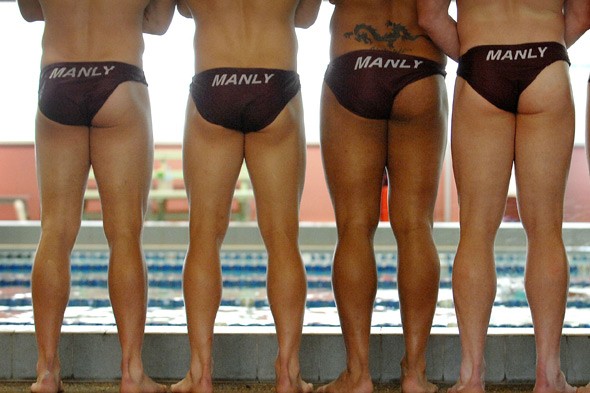
Manly swimming trunks

I had owned the trunks for so long and used them so infrequently that I forgot they were trunks at all. During a sweltering summer, I was talking to my girlfriend on the phone and observed that it was so hot that I had taken the risk of coming into the office – I worked at the Guardian at the time – in my shorts. “But you don’t own any shorts, Matthew,” said Cath. We used to call Cath the Truth because of the way she undercut our illusions. In this case, the illusion that the trunks were shorts and the further illusion that it would be acceptable to come to work at a national newspaper, even one as famously liberal as The Guardian, in them. I exited the office as briskly as my crouch permitted.

So we are stacking up questions here: why didn’t I own a proper pair of shorts? Why did it take me so long to replace a pair of twenty year-old trunks? If I am swimming five miles every week, why wait six months before buying a pair of goggles? And why did I have a muscle memory of doing the breaststroke down Newlyn Avenue when all the other boys were on their bikes?
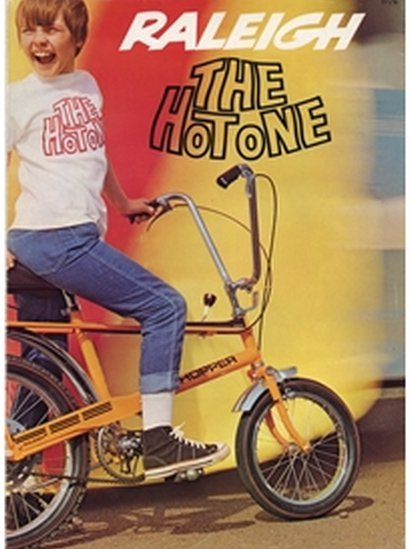
I was raised to be frugal. My mother believes in making the best of what you’ve got and not needlessly expending resources on fripperies such as trunks or bikes. This was why, when the other boys pedalled their unnecessary bikes down Newlyn Avenue, I  luged alongside on a plastic turtle, its casters jiggling manically over the tarmac. The turtle was green. It could go at a fair clip, downhill. But it was never designed to be a mode of transport. The arm action required to power it was similar to the pushing down part of breaststroke, hence the muscle memory. Also there was something familiar in my desperation to keep up with the big boys despite being hopelessly under-equipped for the job.

When I got home after swimming, I told all this to Cath. She’s my wife now so she knows all about the turtle-that-was-not-a-bike.

“You’ve grown, though,” she said. “You can buy goggles now. You can recognise what needs to be done, and do it. You’ve learnt an important lesson for a forty-year-old man. Sometimes making do is not good enough. To preserve our dignity, sometimes we actually have to go to the shops.”
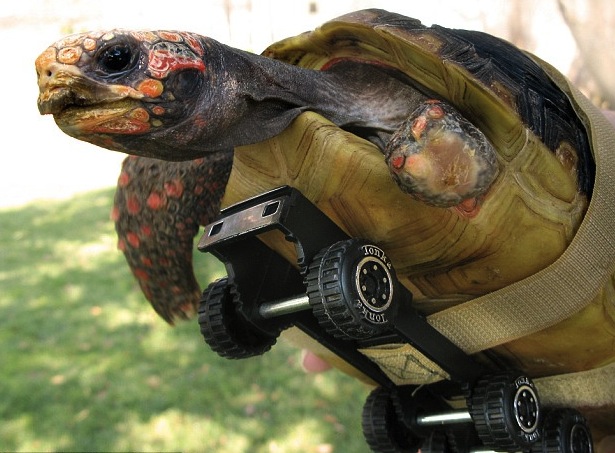
Turtle on wheels