The soundtrack to The Destructives
Leave a reply

I was lying facedown on the rug when this new review of The Red Men popped onto my stream. It is by Jonathan Thornton, and it highlights aspects of the novel that have gained in currency in the ten years since I first wrote it. Also, the review engages with the whole novel, particularly its dualistic structure.
The review can be read here.
It arrived at pretty much the same time that I learnt that the proposed film adaptation of The Red Men now has a scriptwriter attached. So, progress on both fronts. I hope at some point to see The Red Men published in the US alongside my subsequent two SF novels IF THEN and The Destructives. If only to complete this loose trilogy, a concept I explored further for Sci-Fi Bulletin.

Here is RAID71’s cover for The Destructives. It shows Theodore Drown in his sensesuit, exploring the replica of early twenty first century house that is erected in a cavern beneath the university of the moon. The various obscurities of that sentence will become clear when the novel is published by Angry Robot in the UK and US on March 1st 2016.

I wrote a new science fiction short story for Christmas. It’s called Godforsaken and it’s available for free at Barnes & Noble. It takes place in the same world as my science fiction novels.
Of all the archive items the Institute has tagged for my inspection, the diaries and essays of Horace Emmons are the strongest candidate for entry into our shadow history of emergence. Particularly the entries covering the Christmas of 1921.
Emmons was – like myself – a librarian by trade. We share a certain loneliness too, as family men who have chosen to live apart from their families. My solitude, sequestered in the draughty rooms of the Institute, ought to be temporary. Emmons, after abandoning his wife and six children, was intent upon a permanent separation.
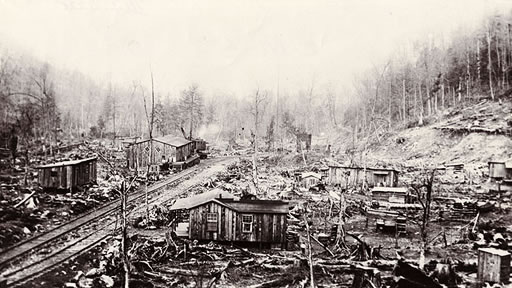
In the week before the Christmas of 1921, Emmons was struggling in the aftermath of an unspecified personal crisis. He had left the family home in October to undertake one of his habitual excursions into the Smoky Mountains then chosen not to return. In his diary, he avoids mention of his family. After spending Thanksgiving in the mountains, he notes only that the hunters arrived with leftover turkey in their sandwiches. Only in December does guilt encroach upon the margins of the diary. His day notes show resolve not to return to his family for Christmas Day. But the marginalia are shivering self-recriminations, scrawled and blotted under the dull glow of a campfire. I recognise the thought process, have felt it myself often enough.Nervous dyspepsia, as Emmons puts it. The towns and cities were dry with prohibition. Moonshine came from the stills hidden in the harsh country. The Mountain Dew. Emmons was a gentleman drunk and what he hymned as the call of the wild was, in my opinion, merely the holler of strong liquor.
To read on, click here.

IF THEN has been receiving some engaged and positive reviews. Publishers Weekly in the US said, ‘De Abaitua builds on the promise he demonstrated in The Red Men in this intellectual science fiction novel, whose ambition is matched by its execution.’
Paul Di Filippo reviewed IF THEN for Locus: ‘This is the kind of post-apocalypse, after-it-all-changed novel—with clever codicils—that the Brits do with so much more classy, idiosyncratic style than anyone else. It is full of magisterial weirdness, logical surrealism, melancholy joy and hopeful terror. If I begin to toss out names like Adam Roberts, Brian Aldiss, Keith Roberts, and J. G. Ballard, I will not be lavishing undue praise.’
In the December issue of Interzone, Stephen Theaker writes, “This is a powerful novel, both in its portrayal of the horrors of World War I, the wasteful loss of life, the dreadful conditions, the failures of those who let the war happen, and also in showing how easily the systems that support our modern-day lives could fall apart. And of course the book is all about the correlations between the two, about what happens when people get to experiment or play war games with the mass of human life, when we are treated as an expendable resource.”
In the UK, renowned critic Maxim Jakubowski, writing for Lovereading.com, said, ‘Both bucolic and an oppressive love story set against the background of an enigmatic dictatorship of sorts, this tale of reality askew is also a powerful meditation on the nature of war, the misuse of technology and the grit and determination of the common man. Thoughtful, at times frustrating but well worth the final reward, and stylistically elegant, a different kind of science fiction.’
John Dodds at Adventures in SciFi Publishing reviewed IF THEN, saying, ‘IF THEN is a particular kind of British rural science fiction, in which a deeply unsettling pall overshadows what should be a Utopian idyll. The novel has antecedents in the works of John Wyndham, George Orwell and Aldous Huxley – and it is every bit as good as the best works of those writers. It is full of mind-bending ideas, great characters and wonderful writing. If there is any justice, it deserves a nomination for the next Hugos.’
I also spoke to John at length about the novel and writing science fiction in general for a podcast.
I09.com have chosen IF THEN to be the subject of their November book club, if you fancy discussing the novel with other readers. I will participate in a Q&A about the novel on I09 on Thursday November 12th.

My new novel IF THEN is out now, published by Angry Robot in the UK and US.
We launched the novel with signings at Forbidden Planet in London and Birmingham, and then a packed party in Broadway Books in Broadway Market, Hackney, just down the road from where I live.

Me, editor Phil Jourdan and PR Penny Reeve from publisher Angry Robot
I’m keen to discover what readers make of IF THEN. To me, it represents a substantial advance in style, form and content over my debut novel The Red Men. There is a seven-year gap between the two novels. I’ve worked hard over the last four years in particular to improve my grasp of the various aspects of novel writing.
It may seem fussy to always set the title in upper case. But I prefer it that way as it reminds me of the software I used to write, from which the title is derived.
IF THEN has been listed by both I09 and Kirkus Reviews as being among the must-read science fiction and speculative fiction novels of autumn.
Early reviews have been positive.A round-up of them is below. I expect there will be more reviews to come.
“Matthew De Abaitua has written a novel about employment, about daily labour, about the dignity or otherwise of the working individual. IF THEN is a love story, the history of a marriage, a topical meditation on the end of capitalism; best of all, it is a bone-deep, blood-sweet British fantasy, naive and ingenious as William Morris and as warpedly nostalgic as Richard Jeffries’ After London. It is also the only intelligent book ever written about the technological singularity. As disturbingly hyperreal as any Pre-Raphaelite painting, IF THEN imagines what the end of history really will really look like, what’s really at stake, and maybe, just maybe, what we can do about it.” Simon Ings, author of Wolves.
‘Besides a surreal atmosphere, there is some perfectly executed and beautifully described weirdness in IF THEN. Every once in a while, just when things are starting to feel, if not normal, consistent, De Abaitua drops in reminders that the people of Lewes live in a manufactured reality, carefully controlled by something that can quantify, but not understand, humanity. I was drawn into James’ perceptions over and over just for us to be reminded that people and their actions were not genuine.’
I can’t recommend this book more highly. It’s slipstream fiction for polymaths. IF THEN flips off expectations of genre and leaves me feeling like I’m riding its shockwave into the future of literature.’
Karin Wellman, Boldly Read
‘IF THEN is personal and focused on small details, while at the same time addressing the big questions of life and what does it mean to be human. In a way it is an example of the personal made political, which is something that I really believe. Even if you think this isn’t a book for you, I’d urge you to take a chance on it, it really is a fascinating read.’ Susan Hated Literature
‘What follows is a meditation on violence and war. James finds himself working with Hector as a stretcher bearer in an artificial reconstruction of the Gallipoli campaign. Through James’s eyes we see the brutality and senselessness of war. We are forced to reflect on the way modern society normalises war and conflict for the many by concentrating the horror of it in a few. If Then asks us what value we place on people beyond their role as economic units, and whether we would rethink our actions if we were able to truly experience their consequences at first hand.’ Liwella, Astounding Yarns
I’m very pleased with the cover of IF THEN by Raid71. IF THEN ties two ends of the world together: a lost battle of the First World War and its consequences over a hundred years later in the lives of a post-collapse Sussex town. Raid71’s powerful cover brings these two devastating moments together, with a melancholic but cool precision.
I only finished editing the novel a couple of weeks ago so there was only time to send the novel out to a couple of writers whose work I admire. Simon Ings, the author of Wolves (Gollancz,2014), The Weight of Numbers and Dead Water was kind enough to read this advance proof and let me know his thoughts about IF THEN. And here they are:
‘Matthew De Abaitua has written a novel about employment, about daily labour, about the dignity or otherwise of the working individual. IF THEN is a love story, the history of a marriage, a topical meditation on the end of capitalism; best of all, it is a bone-deep, blood-sweet British fantasy, naive and ingenious as William Morris and as warpedly nostalgic as Richard Jeffries’ After London. It is also the only intelligent book ever written about the technological singularity. As disturbingly hyperreal as any Pre-Raphaelite painting, IF THEN imagines what the end of history really will really look like, what’s really at stake, and maybe, just maybe, what we can do about it.’

My next novel IF THEN (Angry Robot, September 2015) is on Fantasy Faction’s list of the most anticipated novels of 2015. It’s a publishers’ list. Readers are yet to get their hands on it. I’m keen to discover what readers make of the novel.
Phil Jourdan’s description below gave me a first glimpse into the novel’s themes that might resonate with readers, and a reminder that my fictions can be disturbing.
Angry Robot’s consultant editor Phil Jourdan describes IF THEN thusly:
‘Matthew De Abaitua’s sci-fi interpretation of the First World War set in the near-future is the very best kind of troubling. He’s not just telling a good story: he’s playing with the concepts of time and space, the naturalization of technology, the meaning (or lack of meaning) in human suffering, the economic and historical forces we just don’t understand… but, yes, he’s also telling a damned good story.’
So what is that story?
I’m not ready to divulge. I’m still toying with describing IF THEN as ‘Austerity science fiction’ as it was inspired by the jokey articles about Greece selling their islands to pay off eurodebt, and my unjokey experience of poverty and marginalisation during the Great Recession.
I was going through my initial ideas and came across a diagram that attempted to connect the areas of interest and contrary impulses that lead to the novel. I spend a lot of time teaching creative writing; that is, explaining inspiration with the patter of reason and principles. This diagram reminds me that my methods are ways of disguising the profoundly irrational way in which I think. Click thru to view.

I contributed a short essay to Frieze about Living in the Future magazine.
Living in the Future is a small magazine of essays, fiction, speculations and poetry, exploring science fiction ideas and the ‘science fiction-like phenomena’ emerging in the contemporary world. What are these emerging ‘science fiction-like’ phenomena? Not space exploration, aliens or time travel. Rather, Living in the Future examines the possibilities of artificial intelligence, the actualities of human interaction with computer algorithms, bio-technology and the cultural dominance of the network. It is, then, part of art’s evolving response to what we can call network culture.

Tor.com is running a brief interview I did with Niall Alexander on the back of the acquisition of my new novel IF THEN by Angry Robot. In it, I explain briefly why there is such a gap in time between first publication of The Red Men and the 2015 publication of IF THEN. I also discuss the image that inspired the novel, and why I wanted to imagine the First World War as science fiction:
Basically I wanted to re-experience the war as a science fiction event, as a monster of technology with an inhuman agency. And I wanted to write post-austerity SF about a disenfranchised and redundant middle class being maintained by an algorithm. Because that was my experience at the time. And wandering the South Downs I had a keen sense—almost a vision, among the sea fret—of a newly-dug trench appearing in the Downland. Science fiction combines the cognitive reasoning impulse with the irrational, dreaming, will-to-strangeness. So I went along with this vision of a long-lost war being recreated by a non-human agency. There comes a point where you just have to get on your hands and knees and crawl deeper into the rabbit hole.
