Author Archives: Matthew De Abaitua

Warning sign from Shynola's short film Dr Easy

Dr Easy

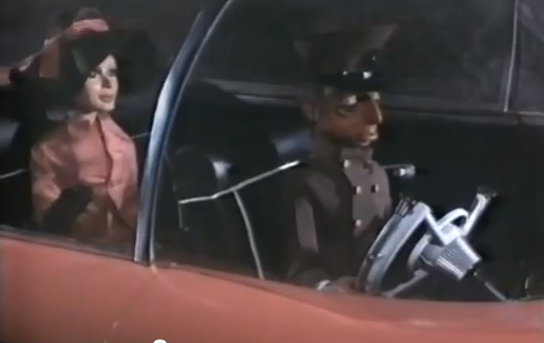
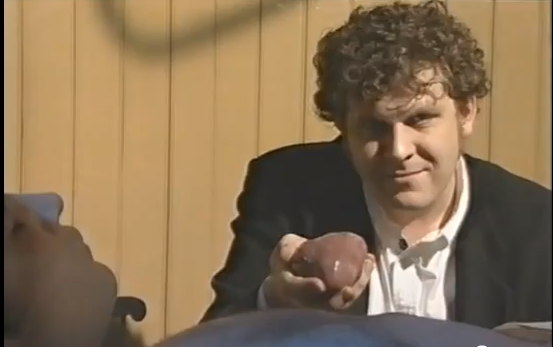
Anna Higgs at Film 4.0 has announced that Shnyola’s short film ‘Dr Easy’, which is taken from the universe of ‘The Red Men’, will be released online March 2013. The action of the film follows the first chapter of The Red Men: a siege in a rundown flat in Hackney that is resolved by the arrival of the robot, Dr Easy. It features Tom Hollander.
Warning sign from Shynola's short film Dr Easy
See also the Film4 blog:
and Warp’s page on the film.

and Shynola’s online production diary, TheRedMen. The film is shot, edited and currently having the VFX put together.

From The Red Men novel:

The siege house was a Victorian terrace carved up into bedsits. Six doorbells clustered beside the shattered front door. Dr Easy went inside. On the screens, we watched the robot’s slow progress up the staircase. Its inner monologue came through the monitors. It could already smell Michael Michael. He was giving off waves of fear hormones, the stink of a wounded and hunted animal. The robot crept up a tilted cobwebbed staircase until it came to an unlocked door. The gentlest pressure from the robot’s paw swung it back on its hinges.
The room was dingy. A dirty single bed. A Baby Belling oven on a peeling melamine surface. A microwave. A stereo. A half unpacked suitcase. Michael Michael was crouched in the corner. His shirt was slick with blood. At the sight of the robot, he gurgled and gesticulated with the handgun.
“He has a bullet wound to the mouth,” observed Dr Easy. “And there is an overpowering smell of petrol in here.”

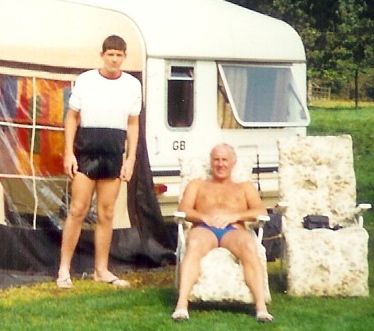
father and son wearing trunks

Trunks

father and son wearing trunks

I have finally learnt to swim properly. For months, I have been gamefully thrashing away with a breaststroke undeveloped since the mid-1980s, keeping my head above water at all times and exiting the pool with a distinct pain in the neck. This style of breaststroke, in which the swimmer attempts to preserve their hairdo at all cost, served me well on the three or four occasions, in the previous twenty years, that I exercised.

Now that I am forty, and attempting to outswim death, a more efficient stroke is required; after an evening with Google, some terrible advice from a content farm (“Inhale when your face is in the water, and exhale when it is out” – thanks eHow). and the purchase of some goggles, I did it; I stopped swimming like an old lady.
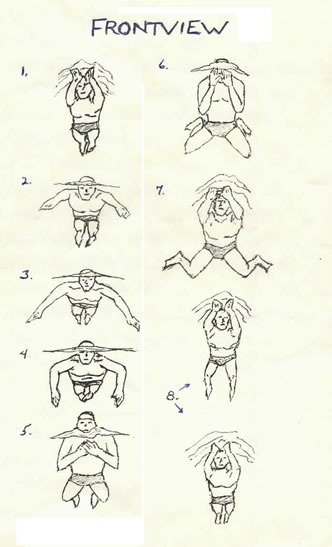
Directions on how to swim breaststroke

I glided alongside the proper swimmers in the grown-up lanes. Pausing for breath in the shallow end, I had a faint muscle memory. Something in my childhood to do with running with the big kids. No, not running. But something like running.

“The Frenchmen on the sun loungers were

hirsute and wore tiny speedos stuffed with

roadkill”

After changing, I sat in the leisure centre lounge sipping hot chocolate and the memory returned: boys cycling down Newlyn Avenue near to my family home, and me cycling to keep up with them. No, wait. Not cycling. I didn’t have a bike. Not then. I was five or six years old. The other boys were going so fast on their bikes and I was thrashing away trying to keep up, doing a kind of breaststroke. Surely not. How could they have been riding and I swimming?

To answer that question, we must inspect my trunks. I’ve been swimming four miles a week for five months and yet only last weekend did I buy a pair of goggles and – more crucially – a new pair of trunks. The elastic had withered on my old trunks and I was reduced to tying them in place with knotted boot laces. These old trunks had been purchased for a camping holiday twenty years earlier, pointlessly as it turned out, as the French swimming pools would not admit a man in boxer short-style trunks; the pool bouncer tutted his index finger at my big trunks and pointed approvingly at the various Frenchmen on the sun loungers; they were hirsute and wore tiny speedos stuffed with roadkill.
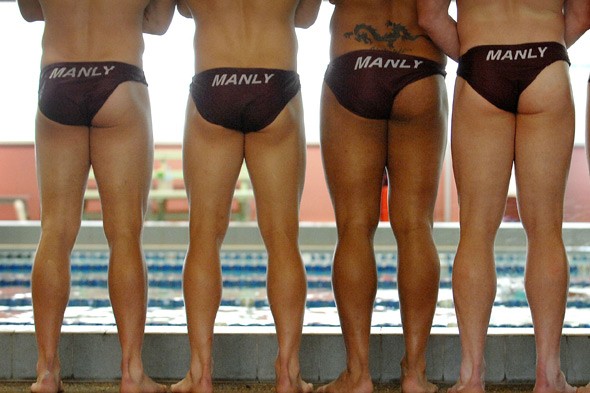
Manly swimming trunks

I had owned the trunks for so long and used them so infrequently that I forgot they were trunks at all. During a sweltering summer, I was talking to my girlfriend on the phone and observed that it was so hot that I had taken the risk of coming into the office – I worked at the Guardian at the time – in my shorts. “But you don’t own any shorts, Matthew,” said Cath. We used to call Cath the Truth because of the way she undercut our illusions. In this case, the illusion that the trunks were shorts and the further illusion that it would be acceptable to come to work at a national newspaper, even one as famously liberal as The Guardian, in them. I exited the office as briskly as my crouch permitted.

So we are stacking up questions here: why didn’t I own a proper pair of shorts? Why did it take me so long to replace a pair of twenty year-old trunks? If I am swimming five miles every week, why wait six months before buying a pair of goggles? And why did I have a muscle memory of doing the breaststroke down Newlyn Avenue when all the other boys were on their bikes?

I was raised to be frugal. My mother believes in making the best of what you’ve got and not needlessly expending resources on fripperies such as trunks or bikes. This was why, when the other boys pedalled their unnecessary bikes down Newlyn Avenue, I  luged alongside on a plastic turtle, its casters jiggling manically over the tarmac. The turtle was green. It could go at a fair clip, downhill. But it was never designed to be a mode of transport. The arm action required to power it was similar to the pushing down part of breaststroke, hence the muscle memory. Also there was something familiar in my desperation to keep up with the big boys despite being hopelessly under-equipped for the job.

When I got home after swimming, I told all this to Cath. She’s my wife now so she knows all about the turtle-that-was-not-a-bike.

“You’ve grown, though,” she said. “You can buy goggles now. You can recognise what needs to be done, and do it. You’ve learnt an important lesson for a forty-year-old man. Sometimes making do is not good enough. To preserve our dignity, sometimes we actually have to go to the shops.”

Turtle on wheels

The cover of the paperback edition of The Art of Camping by Matthew De Abaitua

The Art of Camping paperback

The Art of Camping: The History and Practice of Sleeping Under the Stars is out now in Penguin paperback.

Join us at http://www.facebook.com/artofcamping
The cover of the paperback edition of The Art of Camping by Matthew De Abaitua

Reviews
Does for camping what Roger Deakin did for wild swimming. (Independent )
A delightful combination of history and memoir with a generous dollop of guidance thrown on top . . . read this gem of a book. (Economist )
An elegant ode to the joys of camping. All sorts of tips on campsite etiquette, lore, equipment, and best practice, and his advice is convincing and honest. He is a lovely writer and his history is enlivened with tremendous flashes of wit. (Daily Telegraph)Teaming witty anecdotes with a potted history of what sleeping under the stars means sociologically, De Abaitua makes learning how to create a tented home away from home fun. (Elle)De Abaitua will soon have you believing in this consistently engaging and enjoyable book. It’s a fine writer indeed who can seem authoritative, approachable and just great fun. (Metro)

“The Art of Camping is the perfect chiarascuro of personal observation, wit and insight, with a detailed – but never over-egged – history of a stream athwart the main current of urbanised life. The entire hidden under-the-groundsheet history of camping provides such a fascinating perspective from which to look back on the follies of the permanently settled, while, in and of itself, it turned out to be a vital strand in the liberation movements of the 20th century.” Will Self.

Could there be another way of life? Can I survive with less stuff? Should I run for the hills?

These are all good questions that people have asked before, throughout history, and which have inspired people to set up camp. But now camping is part of the drive for self-sufficiency, a reaction against mass tourism, a chance to connect with the land, to experience a community, to leave no trace . . .


From packing to pitching, with hikes into the deep history of the subject and encounters with the great campers and camping movements of the past, the Art of Camping is a witty and philosophical blend of ‘how to’, history and personal anecdotes – a must for every camper.

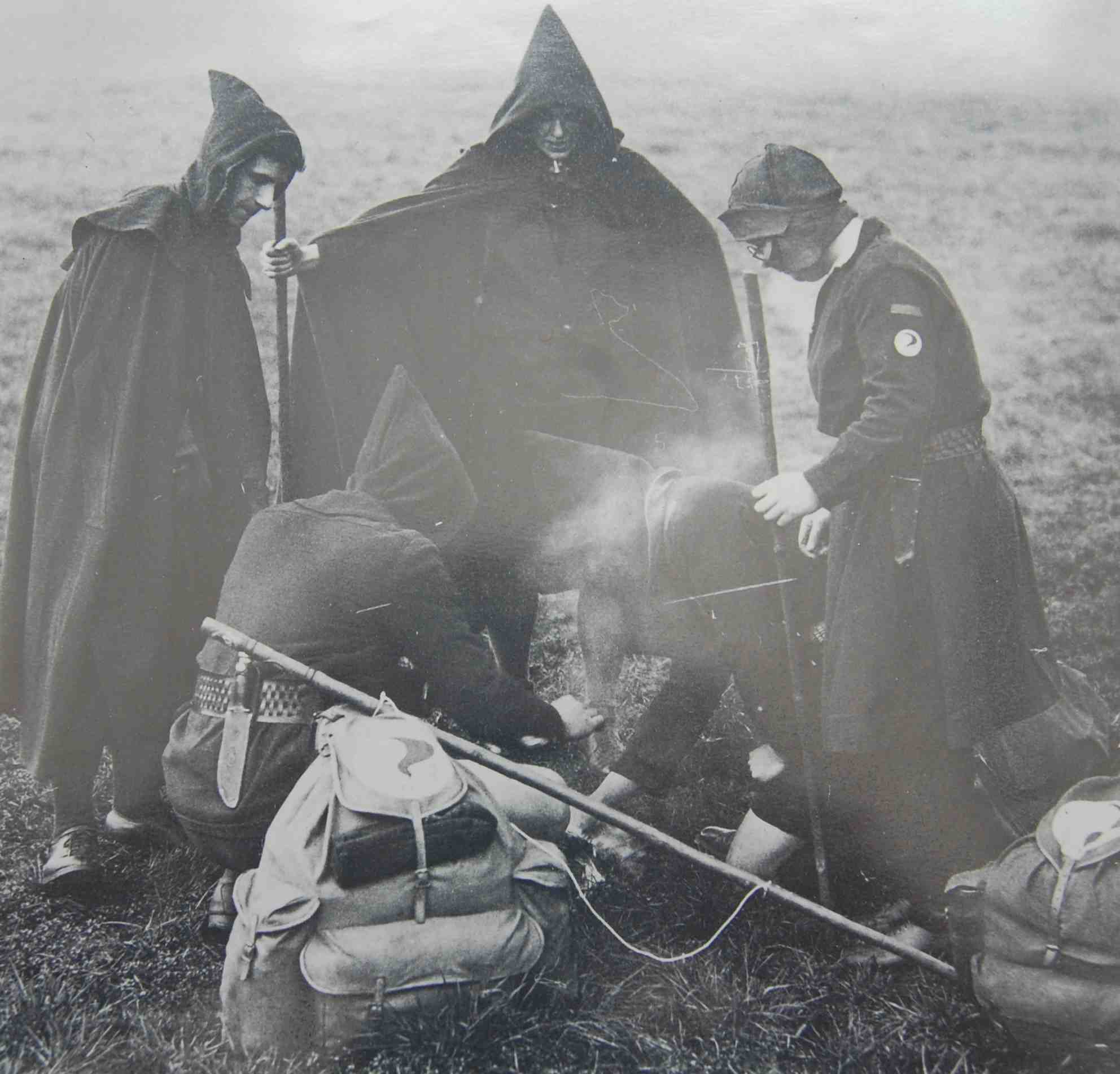
Members of the Kindred of the Kibbo Kift around the campfire

Campfire Mix

Being brief readings from Matthew’s De Abaitua’s book The Art of Camping: The History and Practice of Sleeping Under the Stars (Hamish Hamilton) mixed with campfire tracks by the legendary Richard Norris (The Time and Space Machine, Beyond the Wizard’s Sleeve).

Voice: Matthew De Abaitua
Mix: Richard Norris
Recorded and mixed in Lewes, East Sussex.

Twitter
@MDeAbaitua
@MrRichardNorris

Buy

Cover of Matthew De Abaitua's camping book the Art of Camping
Book | Kindle | Apple


Tracklist
1. The Golden Morning Breaks by Colleen from the album The Golden Morning Breaks. Reading from ‘The Spirit’ taken from The Confession of the Kindred of the Kibbo Kift by John Hargrave.

2. Camping by Sunol from the album Ohlone. Reading from ‘The Perfect Campsite’ from The Art of Camping: The History and Practice of Sleeping Under the Stars by Matthew De Abaitua, published by Hamish Hamilton. Reading of ‘The glories of a mountain campfire’ by John Muir from John of the Mountains and quoted in The Art of Camping.

3. To The Fields by Circulus from the album Clocks Are Like People.

4. The Fire in My Head by Voice of the Seven Woods from the album Voice of the Seven Woods. Reading from ‘In Yosemite with John Muir’ by Theodore Roosevelt from his An Autobiography (1913), and quoted in The Art of Camping.

5.Farmland, Freeland by The Advisory Circle from the album Other Channels. Reading from Letter to the Editor of Forest and Stream by Nessmuk, quoted in The Art of Camping.

6. Campfire by Grizzly Bear from the album Horn of Plenty. ‘How to Light a Fire Without a Match’ adapted from Ernest Thompson Seton’s Two Little Savages for The Art of Camping.

7. The Magic Place by Julianna Barwick from the album The Magic Place. Reading from ‘At the Al-Thing’ from The Art of Camping: The History and Practice of Sleeping Under the Stars by Matthew De Abaitua (Hamish Hamilton).

8. Space Meadow by The Present from the album The Way We Are. Reading from ‘The figures marched up the Long Man of Wilmington” from The Art of Camping: The History and Practice of Sleeping Under the Stars by Matthew De Abaitua (Hamish Hamilton).

9. Harmonic Convergence by Enumclaw from the album Opening of the Dawn.

10. Ancient Campfire by Biosphere from the album Shenzhou. Reading ‘The Camping Years’ from Leslie Paul’s Angry Young Man, quoted in The Art of Camping.

To Download MP3:


Request download link for Campfire Mix MP3
* indicates required


Conversations with Alan Moore

Alan Moore smoking a cigarette in a pizza restaurant in Northampton in 1998My interview with Alan Moore for The Idler in the 1990s has been included as part of a collection of conversations with the great man: Conversations with Alan Moore, edited by Eric Berlatsky. In an interview discussing the collection, Eric explained his reasoning behind including this particular conversation:

“De Abaitua’s interview is great for its discussion of Moore’s ideas about magic and neo-Platonism. They barely discuss comics at all, but that didn’t bother me because the conversation reveals so much about the ideas and philosophies behind the comics that it would help anyone understand From Hell and Promethea, especially.”

The Red Men at Fiction Uncovered

Only five years after The Red Men was first published, it has been treated to an in-depth review by Ka Bradley at Fiction Uncovered.

http://www.fictionuncovered.co.uk/review/the-red-men/

I smiled wryly at the references in the review to Facebook and Second Life, neither of which were around when I wrote the book. MySpace was barely a glimmer. The apostles of the Great Refusal and the World War II revival were easy to predict, an obvious UK reaction to any substantial economic adversity – and so it proved with the ubiquity of Keep Calm and Carry On in response to the financial tumult. That the gnostic CEO of Hermes Spence now reads as a satire upon the cult of Steve Jobs only proves that the deification of Jobs was a role that the culture was yearning for – prior to his burgeoning public image.

Inbetween other projects I continue to plan and write stories set in the world of The Red Men. I am particularly concerned with the development of some of the underlying technologies during field surgery in World War I…