Author Archives: Matthew De Abaitua

Woodstock

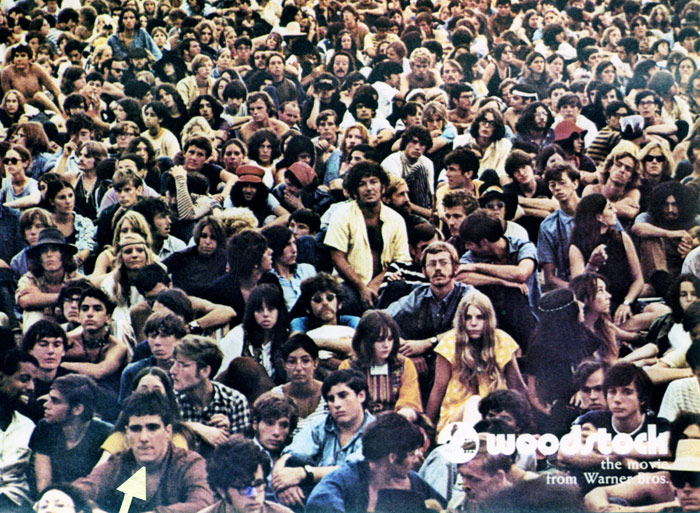
The Sex, Drugs and Rock ‘N’ Roll Were Incidental

“Just a very unpleasant camping experience.”
Joseph Coakley, quoted in Woodstock: The Oral History by Joel Makower, Michael Lang

We arrived at White Lake farm in the late afternoon after a dusty hike along back lanes. There were no allotted pitches, nor was the campsite owner there to meet us. Sylvia went to check on the facilities while I hunted out a promising spot to pitch the tent. Summer showers had left the ground soft. The cow field curved down from a ridge into a deep bowl. Further rainfall would turn that lowland into a muddy bog, so I resolved to pitch high on the ridge on the edge of a wood. My first intimation that something was wrong came from Sylvia.

“The facilities are rudimentary,” her expression was grave with foreboding, “the site is filling up, but many of the campers seem ill-equipped.”

A muggy afternoon deepened into a sultry twilight. I gained the ridge, and gazed down. A great crowd was massing around a distant orange haze. I asked Sylvia if she knew what it was. She did not. The night grew cold. I set a campfire and lit it with a single match. All that existed in the world for me was illuminated by the flickering light of the campfire: Sylvia’s strong cheekbones, her chestnut hair tied back, her green singlet dusty from the trail.

“The ground cursed at me. There were lovers under my boots, lovers wrapped in plastic sheeting”

All night, I dreamt of a great exodus, of weary feet tramping. The Indian followed the herds of mastodon and giant buffalo across the ice of the Baring Straits to Newfoundland, and then down through the continent upon a ceaseless ancient quest, the Great Campers who walked the land before us and whose footsteps echoed under the soil.

I woke from this dream, and felt the need to use the facilities. It is a scientific fact that the body expends warmth heating up a full bowel and bladder. As I put on my boots, I was minded of the wisdom of Deutoronomy concerning camp latrines: “Thou shalt also have a place without the camp, whither thou shalt go abroad: And thou shalt have a paddle upon they weapon, and it shall be, when thou wilt ease thyself abroad, thou shalt dig therewith, and shalt turn back and cover that which cometh from thee.”

I took up my paddle and went out into the woods. The ground cursed at me. There were lovers under my boots, lovers wrapped in plastic sheeting. Under moonlight I saw bodies, bodies everywhere, in fitful, cold and painful sleep. My dream of exodus had come true. As I slept, a mass of people had arrived at the campsite. These child-like half-naked people had done nothing to ease their hardship, not even hollowed out a curve in the ground for their hip bone to rest in.

“What are you doing here?” I asked them.

“We have come for the music,” was their groggy reply.

“But there is no music,” I said.

A bearded naked man disagreed with me. He took me up onto the ridge and pointed to the distant orange glow. “That is where the music is,” he said. “Yesterday, some of my friends went to listen to it. I haven’t seen them since.”

I picked my way through the sleepers and into the woods. I dug a hollow and crouched over it. The tree tops thrashed overhead. Snagged in the branches, broken guy ropes and shreds of flysheet.
Dawn rose upon what I can only describe as the most disastrous camping trip in human experience. As I breakfasted, frying a little ham fat over the fire, our fellow campers hung around in muddy and sodden blankets, as mangy as jackals. Sylvia shared her bread and dripping with them, and they in turn offered her a reefer and a jug of wine. All good campers are abstinent; the discipline required at camp quickly falls apart with excessive libation. She cheerfully refused their offer, but found them friendly and implored me to help them.

The clouds were low and swift. Spiders strengthened their webs. Portents of a storm. A camp needs a captain. The young men responded to my call to action. In no time, we strung up a tarpaulin between the trees. Again they offered us wine and smouldering reefers, as if that was their panacea to all ills. Their friends returned with stories of other goings-on across the campsite. The music, I ascertained, was far out. But the mood was labile, jackknifing from bliss to grinding fear. The barbed wire fences enclosing the campsite had been breached, spilling more ardent campers into our midst, and the mud in the hollow cow field had been churned into a quagmire.

“We must help the people down there too,” said Sylvia. I agreed. We packed a light rucksack with provisions for the day, and a change of dry clothes, and then we set off over the ridge and down toward the orange haze. The camp kitchens had been torched over night, in an act of self destructive delirium. Everywhere the spirit was poised between creation and destruction.

“It’s like a war zone,” gasped Sylvia.

Overhead, a helicopter kept a watchful distance, the violence of its rotor blades matched by flinching and twitching expressions upon the faces of stupefied campers. A trio of nuns passed ahead of us, they too had come to minister to this tragic assembly. I asked the nuns if any campers had died and one of them held up two fingers.

The crowd loitered bovine in the mud. It took hours of apologies to pick our way through them. At last, we reached the orange haze, a rig of lights and a stage, bookended by two towers, tall assemblies of scaffold with a tarpaulin stretched between them. Here, I reasoned, was the source of the music that everyone spoke of. Yet the stage was empty.

The long-brewing storm broke with terrifying vigour, the towers listed and shook, and the tarp – for want of a guy rope – twisted and billowed. The rain raked over the crowd. Sylvia and I, secure in our ponchos and boots, erected makeshift shelters out of the trash strewn upon the earth, plastic sheeting and splintered planks. No sooner had Sylvia and I heaved another improvised bivouac into position than it bulged with cold and weary youngsters. One man refused my offer of shelter. He lifted his dirty face to the downpour, and accepted it as his due.

A toothless clown clambered up on stage. He warned the crowd away from the towers. At last, I thought, someone to take charge of the rabble. I pleaded with my fellow campers to return to their tents and seek shelter. No, they would wait for the music.

“There is no music,” I shouted against the gale.

“You are wrong,” they muttered.

The clown took leave of his senses, and lead the mob into a chant to ward off the rain. Any good camper comes prepared for rain, and should have no need to resort to sympathetic magic. Under foot, the mud liquefied and turned to a foul slick. Camp hygiene was the first to suffer. The site was rank with body odour, and it was apparent, downwind of them, that the facilities had been overwhelmed.

I tried my best to enjoin the spirit of the thing. Against the silence flowing from the stage, spontaneous bands of music makers sprung up; a beautiful woman played the flute accompanied by a shirtless, long-haired gentleman on the bongos. A small crowd danced, the yearning for rapture teetered on the verge of desperation. From the stage, the toothless clown persisted with his announcements, even as the wind tried to blow him away. A messenger crouched beside the clown, and handed up a piece of paper containing further messages, and from the clown’s serious expression, I reasoned there was bad news to come. Behind the stage, at the centre of its own tempest, a helicopter reared over flattened grass, the side doors open, preparing to evacuate the first of the musicians.

Twenty Eight Versions of Purple Rain

Prince will never tell us what Purple Rain means. Artists hate closure. They want their work to live, and that life requires an air of mystery; refusing to answer the question is a superstition that will ward off the end.
Prince-Purple-Rain-above
Couldn’t you just let the Purple Rain wash over you? Does it have mean anything?

Everything means something. Every utterance connects to another, past and present, to form the delicate tower of invisible meanings swaying upon our every word. There are many meanings, as many as there are listeners, and where those meanings overlap, there is enlightenment.

If you type “what does Purple Rain mean” into the internet, you get the opposite of enlightenment.

There are twenty-eight versions of Purple Rain on my iPod, all performed by Prince at various times in the last twenty seven years. These twenty-eight versions are by no means every performance of Purple Rain Prince has ever undertaken but they are a representative sample, certainly for our needs; each performance reveals something of his life at that time, and something different about the song. Listening to them all back-to-back takes about five hours. I will write twenty eight short essays about Purple Rain – here is the first.

First Avenue, August 3rd, 1983

Wendy Melvoin is fresh from high school. She is a wearing a V-necked sleeveless top, and patterned shorts. She is playing the first chords of a new song on her purple guitar, opening chords that she wrote, a circular motif with a chorus effect. Wendy is eighteen nineteen and she has the high cheekbones and diffident confidence of a Hollywood upbringing. She half-smiles at the faces that crowd close to the low club stage. This is Wendy’s first gig with the new band, and the song she is playing is Purple Rain, and nobody in the audience has ever heard Purple Rain before because this is the night that Prince and the Revolution record the song.

Maybe Wendy is half-smiling because she is thinking about the time when she was thirteen years old and she snuck out of the house with her twin sister, Susannah, to hang out at a club called Starwood. The sisters danced, and then the DJ played a piece of bubblegum funk with a coy gushing lyric about the Soft and Wet qualities of a lover. The song made Wendy stop dead. She ran up to the DJ booth and asked, who is that girl singing, and the DJ told her it was not a girl but a boy called Prince. I think that half-smile of hers is in appreciation of the irony that she was once a fan of the man she now shares the stage with.

We hear Prince, his harsh guitar cutting across Wendy’s. We don’t see him yet. Purple Rain has a long introduction. The sound guy keeps scuttling around in the stage front. Wendy sees someone in the audience and smiles full beam. Her hair tumbles over one eye in a quiff, and there is a sheen on her breastbone from the heat in the club. It’s August and nearly ninety degrees in there; when Prince appears behind her, she regains her cool.

The lights make it appear as Prince is wearing a radioactive purple shirt. He comes to the mic too early, and briefly backs away, his eye-make up dark patches in a deep purple stage light, sweat glimmering on his cheekbones, and his hair asymmetrical and tumbling over his eyes, just like Wendy. Her smile, his seriousness, they complement one another, brother and sister, nothing sexual.

The gig is a benefit for the Minnesota Dance Theater. Prince and the Revolution are taking dance lessons and their tutor suggests the gig as a way of supporting the financially challenged theatre; because Prince is a local lad, born and raised in Minneapolis, a city he will always come back to, he agrees to play.

In 1983, Prince is an international star, thanks to 1999 and Little Red Corvette. He has released five albums in five years, from when he was eighteen years old. He has so many songs he forms other bands like The Time and Vanity 6 to play them, he is an impresario and a producer and he is also only twenty-three years old, not so far away from the poor black kid who stood outside McDonald’s just to smell the food he couldn’t afford. His instinct for self-reliance, his tendency to be dictatorial, has been blindsided by these two sophisticated young women, Wendy and, on her keyboards, her lover, Lisa; for the first time in his life, he will collaborate in a meaningful way.

For Wendy, Lisa and Prince, this time is like going to college. They hang out together, play each other music. Lisa has a great sound system in her car, and she takes Wendy and Prince for a drive. The two young women introduce Prince to music he has never heard before – Gustav Mahler, the English pastoral of Vaughan Williams, the experiments of Joni Mitchell and Peter Gabriel. It’s an education for him.

The crowd at First Avenue, their faces straining against one another, receive the brief benediction of a wavering spotlight: to them, Purple Rain doesn’t sound like any song that Prince has played before: the tight electronic funk, his harsh and weird sex songs, the soul ballads in which he asks for forgiveness – Purple Rain is something new, something different. They don’t know how to react. In fact the crowd is so muted that when this recording is prepared for the album, the engineer loops some crowd noise taken from a football game to give it some life.

What do great songs sound like the first time we hear them? Can you remember that feeling? When Bob Dylan heard The Animals’ version of House of the Rising Sun, he got out of the car and ran around it again and again he was so excited. The first time you hear a great song is so rare, and it can never be repeated; watching the crowd during this first performance of Purple Rain, I see that look on a few faces, a silent shocked awe. On the twenty-seven other recordings of Purple Rain in my iPod, the moment the first chord is strummed, the crowd cheer, acknowledging the anthem. They become a congregation, keen to be guided through the Purple Rain, and that has its ecstasies, even if it involves cigarette lighters held aloft, and hands waved in the air. But to hear silence flowing back from the audience, no singalong because they don’t know the words, is to eavesdrop on the shock of the new.

The lyrics of Purple Rain suggest the singer has wronged someone, harmed them inadvertently. In the context of the Purple Rain film that someone is Prince’s girlfriend; in fact, in a rather literal outtake from the film, Prince and his girlfriend have sex in a barn at dawn, and the water streaming down from the roof sheathes her naked skin, which is then struck by the dawn rays, so that she appears to be bathing in a kind of purple rain. Music video directors in the 1980s could be very literal; if Bonnie Tyler sang “turn around bright eyes”, then we would see a boy with very bright eyes turning around.

What does purple represent to Prince? Purple is a gateway colour, a transition from one stage to the next, the colour of dusk and dawn, magic hour between day and night. Purple is also a mix of pink and blue, a boy and a girl. I’m not a woman, I’m not a man. I am something you will never understand. Prince casts himself as androgynous as a tactic of seduction, a conventional hetero offer with a side order of feminine sensitivity, or at least, what a twenty three year considers to be sensitivity. Purple is also the colour of royalty, and he is a Prince. The sub-editors of the Sun will pun Purple Rain into Purple R.e.i.g.n. Or is it the purple of Jimi Hendrix’s Purple Haze? All of these possible meanings are burnt away by the guitar.

The solo is a messianic ejaculation, an absolving, annihilating ecstasy. The sky was all purple and there were people running everywhere, sang Prince, predicting the millennial panic of 1999. He even wrote a song called Ronnie Talk To Russia Before It’s Too Late, a trite bit of rockabilly agit-pop that called for Ronald Reagan to negotiate with the Soviet Union, a sentiment he was to express more succinctly in the high-pitched childish voice in 1999 that asked, “Mommy, why does everyone have a Bomb?” The sky is all purple because it is on fire, and what follows is a quenching of that destruction.

Purple Rain is the redemptive baptism on the night of the apocalypse, forgiveness for the terrible sins committed by the singer and by us. Prince is clear that we are all implicated. Times are changing. It’s time we all reached out for something new, and that means you too. He is our messiah, so he tells us in another song on the album, I Would Die 4 U. You say you want a leader but you can’t seem to make up your mind I think you better close it and let me guide you to the Purple Rain.

Abandon reason, don’t fight it, embrace unthinking blissful acceptance. A congregation singing as the bomb falls. Or as God has an orgasm. Or is it just the worst excuse a man ever gave a woman for hurting her – I am sorry, I didn’t mean it, but I am the messiah.

Does the answer lie in what is hidden? On this first performance of Purple Rain, there is an extra verse that will be cut. The verse doesn’t work. I don’t want your money, I don’t want your love, I want the heavy stuff, I want the Purple Rain. The verse makes Purple Rain sound like a narcotic. And Prince has never been one for narcotics.

No, the meaning of Purple Rain is not yielded up by some missing piece, or on just one performance. It’s only after listening to all twenty-eight recordings on my iPod, and writing about them, that I will come to some understanding. Some acceptance. It’s a course of religious instruction that I will undertake alone.

An intimation of where that quest will lead me comes when I listen to Prince perform Purple Rain last year in France. He’s 52 years old, so far away from that hot August night with Wendy. The Parisian crowd kick in with the singalong as soon as the intro starts. They are ready for the anthem. Synthesized strings and the lead piano line, but no lights, no Prince. On stage, shapes move through the gloom, and a conversational guitar solo begins. “I love this song,” Prince announces, reassuring us that the concert is not just chicken in a basket nostalgia: the song is alive, and he still means it. The regret in the lyrics, I never meant to cause you any sorrow, I never meant to cause you any pain, has an added weight coming a man in his early fifties; Prince has made so many mistakes and had his share of pain, two failed marriages, a child that lived only for a week, and his parents both dead. Listening to him play the song in Paris, I realise that unlike other rock anthems like My Generation, or Satisfaction or Wouldn’t It Be Nice, you don’t have to pretend the old man on stage is the young buck who wrote it. The lyrics suit middle-aged Prince. Prince is a preacher now, a Jehovah’s Witness who goes door to door in Minneapolis, spreading the Word. And Purple Rain is the promise of a preacher, of another land, another place, where we will be together and forgiven. Sing it, he demands of the audience, and they do, they sing with fervour.

And then he whispers to them, “Do you know what you’re singing about?”

Sun Ra

HiLobrow hero: Sun Ra

My brief appreciation of Sun Ra is at HiLobrow.

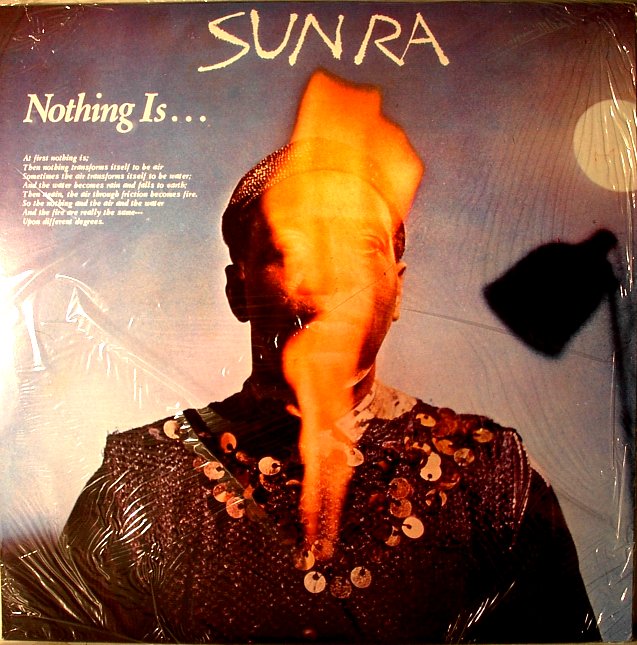
To write of SUN RA (1914–93) is to balance Saturn upon an egg cup. He was born Herman Poole Blount in Birmingham, Alabama, a fact he obscured. An unearthly child prodigy, Herman went on to found a swing band and meet with Duke Ellington. Pouring over the Duke’s sheet music, he was emboldened when he discovered that the Duke used dissonance in his rhythms in a way that corresponded to Herman’s own theory of music.

With the onset of the draft for World War II, Herman was briefly imprisoned for conscientious objection. An intellectual, he conducted his own impassioned legal defense but to no avail. Prison brought the unworldly Herman to the edge of suicide. He was afraid of the violence of normal people, and their self-destructiveness, and wrote in his diary that he was indifferent to sex: “My orchestra and the management of it, the arranging and composing, the rehearsing, the developing of potential talent, that is my work and the only earthly pleasure I love.” Total immersion in the imagination demands self-reinvention. He renamed himself Sun Ra and sought out a group of musicians who were equally devoted to their art.

The Sun Ra of popular culture is a high watermark of the far-out. In the film Space Is The Place, Sun Ra quietly mocks the tendency of white counter-culture to project druggy transcendentalism upon his art. Space, he points out, is not just high. It is also as low as a bottomless pit. His incantations are calls to arms — “Space Is The Place,” “Rocket Number Nine Take Off For The Planet Venus” — that sound lonely and desolate. When June Tyson sings “We Travel The Spaceways,” you imagine a massive spaceship with only one passenger.

Komedia with Will Self

Will Self and Matthew De Abaitua at the Excess Express night at the Enterprise, Chalk Farm

Will Self and Matthew De Abaitua at the Excess Express night at the Enterprise, Chalk Farm

I will be joining Will Self for an hour of conversation at Brighton’s Komedia club, on the 24th January 2011 at 7.30pm.

Last year’s performance at the Komedia was sold out, and went very well. I floundered. As I always do. But Will was on excellent form. I take it as a compliment that the sole reviewer of the show thought it was scripted. It was not. The reviewer described us as “Coming across as a kind of intelligent and less shocking Derek and Clive, the pair offered up their wisdom to the floor, counselling audience members with physical ailments, commitment issues and financial woes.”

I have no idea what this next show will hold, except that it asks what is new about the New Year? Certainly time has slowed down in the last ten years, its sluggardly pace caused by cultural stasis and repetition; the X Factor is always the Christmas number one, Stephen Fry is always on the telly, and I am forever putting the bins out.

HiLobrow hero: Russell T Davies

My brief appreciation of Russell T Davies, the man who revived Doctor Who, is here at HiLobrow.com.

I could have written at much greater length about his work on Doctor Who. The show obsesses my family. I have three children ranging from two to eight years old. Across her repeated viewings, my eldest child Alice has noticed things that I have missed – are the shadows that kill the parents of the narrator of Love & Monsters the Vashta Nerada that appear in Silence of the Library, she wonders? Last week she declared Jon Pertwee’s Planet of the Spiders to be the scariest episode, and explained to me the similarity between the spiders that squat invisibly upon the backs of their victims, and the fate changing beetle that besets Donna in Doctor Who (my portrait of Russell T Davies appreciates his creative looting).
Every time I watch Doctor Who I do so in the company of children: I see what excites them, what annoys or bores them, and their reactions are mostly the same as mine – it’s very rare they will like something I do not. There is a universal appeal. What I think Russell T Davies did, that other great science fiction revivals have avoided or failed to do, is engage the family, and that’s not an achievement to be treated sniffily.

Port Eliot festival

This Summer, I will be performing at a few events at the Port Eliot Festival, 23rd to 25th July. As the proud owner of ticket 001 purchased at the first Port Eliot festival, I have long harboured an ambition to perform there. I was booked to talk a few years ago but floods prevented my attendance.
The house at Port Eliot during the festival
For an event entitled We Are Camping, I will wander around the Port Eliot campsite, talking about what camping means, its history, and the radical camping group the Kindred of the Kibbo Kift.

Then I will be taking part in the Idler’s Academy, delivering a talk on How Not To Write.

I will also be hanging around The House of Fairy Tales. I have promised to write a short story with Alice, my daughter, and read it there. The last story we wrote together was auctioned off as part of the Significant Objects project.

The Red Men script handover with Shynola

I met Shynola in the bar of the Phoenix on Charing Cross Road to pick up a copy of their script for The Red Men, delivered within a wrapper embossed with their redesign of the Monad logo. Everything within that wrapper was new to me, as I had no part in the process of turning my novel into a script.

Shynola and Matthew De Abaitua (far right) with the script of The Red Men

Shynola and Matthew De Abaitua (far right) with the script of The Red Men


The Red Men novel is, intentionally, overfull. When writing it, I gave into the pull of another world, and into the dark serendipities of Hackney. An adaptation would have to find its own way through the various layers of reality within the book, and that’s what Shynola have done, making some very clever structural changes to stay true to the intention of the novel, while remapping it for the medium of film.

A script is so changeable. Who doesn’t have notes for the scriptwriter? The form is provisional, built for redrafting, tearing apart, trimming, expanding. Alongside every script, there are shadow scripts, plotlines not chosen, characters deleted; every script has its doppleganger; every script has its Red Man.